
 EN
EN
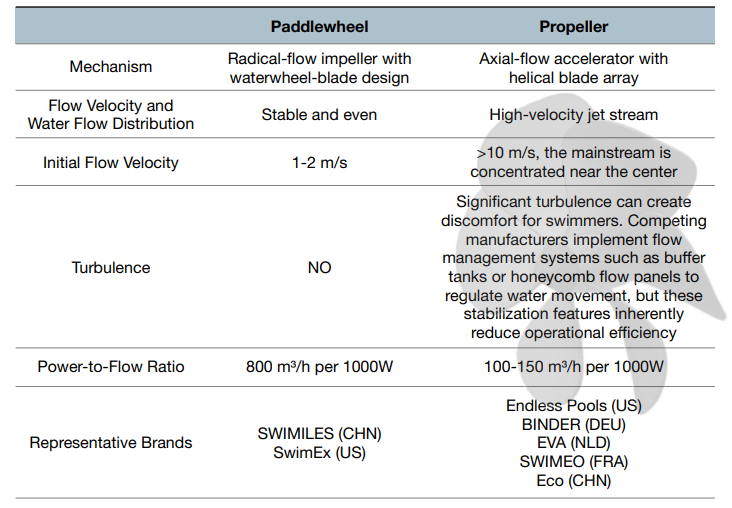
Core Definitions and Key Distinctions
What sets counter current systems apart from swim jets comes down to how they work and what they're meant for. Counter current tech creates smooth, steady water flow with underwater motors that give swimmers natural resistance. This lets people keep swimming continuously without all that annoying turbulence messing up their rhythm. These systems are built for serious training sessions, basically turning regular pools into mini oceans where swimmers can practice just like they would in actual water conditions. Swim jets tell a different story though. They shoot out narrow bursts of water from those nozzles stuck on pool walls. Sure, they work okay for sitting still and getting some resistance or doing physical therapy stuff, but the water gets all messed up which makes it hard to maintain proper stroke timing and build real endurance over time. The bottom line here is pretty simple: counter current units focus on making swimming comfortable while delivering solid training results; swim jets care more about being easy to install somewhere small and providing targeted therapy forces. Knowing these differences matters when picking out equipment because if someone wants to get serious about improving their swimming skills versus just wanting to splash around occasionally, they need to choose accordingly.
How Flow Technology Shapes Performance: Jets vs Propellers
High-Pressure Jet Systems: Precision, Turbulence, and Targeted Currents
High pressure jet systems work by shooting water in tight streams that target specific areas of the pool lanes. But there's a downside too. These jets create a lot of turbulence. Some hydrodynamic research indicates that turbulence can reach over 40 percent with jet setups, while propeller systems only hit around 12 percent or less. This messier water flow actually makes it harder to swim efficiently, cutting performance by as much as 15 according to a study published in the Journal of Sports Engineering and Technology back in 2022. Jets are great for small pools where swimmers need strong resistance in certain spots, but they eat up way more power. The systems require between 30 and 50 percent extra energy just to fight against all the losses caused by friction at the nozzles and those inevitable pressure drops. And let's not forget about the noise factor either. These machines crank out between 75 and 85 decibels during operation, which sounds like being stuck in heavy city traffic. That kind of racket really cuts down on comfort for anyone trying to enjoy their home pool experience.
Low-Pressure Propeller Systems: Wider Laminar Flow and Energy-Efficient Counter-Current Swim Jet Operation
Low pressure propellers in counter current systems can push bigger amounts of water without creating too much speed, which makes for smooth laminar flow in those 6 to 8 foot swimming areas most people train in. The way these systems rotate creates steady currents that stay pretty stable across the width, keeping turbulence under around 12% so swimmers don't lose their momentum mid stroke. From an efficiency standpoint, these systems actually save money to run. Propeller driven models use roughly 40 percent less electricity compared to traditional jet systems but still offer the same level of resistance for training purposes. Most importantly, the water stays consistent enough during workouts with only about plus or minus 5% variation in speed. Swimmers get something close to what they'd encounter in real open water conditions. Plus, because the propellers are submerged and have specially shaped blades, the whole system runs quietly at about 55 to 60 decibels, not loud enough to bother anyone nearby and definitely less disruptive than older models that used to rattle the entire pool structure.
Practical Performance: Flow Rate, Width, Stability, and User Experience
Flow Metrics That Matter: GPM, Current Consistency, and Stroke-Supporting Laminar Profiles
When talking about how well water flows in these systems, there are really three main factors that work together: gallons per minute (GPM), how wide the current spreads out, and whether the flow stays smooth or gets choppy. The GPM number basically tells us how strong the resistance will be. Most home systems run around 1,500 to 2,500 GPM, but when we get into commercial setups, those numbers jump way up past 4,000 GPM. Then there's the question of width. Systems powered by propellers tend to create longer, smoother currents covering about 5 to 7 feet across. But if we're using high pressure jets instead, the water stream stays pretty tight, usually only 2 to 3 feet wide. What happens when things get too turbulent? Well, anything over 15% turbulence starts messing with swimmers' strokes and their muscle control, something researchers have documented in various studies on water dynamics. To make sure training sessions go smoothly, most experts agree that the water speed should stay within a 5% range throughout the entire swimming area.
| System Type | Avg. Flow Rate (GPM) | Current Width | Flow Consistency |
|---|---|---|---|
| Propeller Swim Jet | 2,000–4,500 | 5–7 ft | High (Laminar) |
| Jet-Based System | 1,500–3,000 | 2–3 ft | Moderate–High |
Noise, Vibration, and Turbulence Impact on Training Effectiveness
Too much noise and those annoying vibrations really mess with concentration and shorten how long equipment lasts. Most propeller systems run around 60 to 65 decibels, which is basically what we hear during regular conversations. But those powerful high pressure jets crank things up to between 70 and 80 dB, and after spending time in there, ears definitely start to hurt. When vibrations travel through pool walls, they create these resonant frequencies that wear down structures faster than expected, sometimes even making them unsafe in the long run. Studies on human movement reveal something interesting too. When water turbulence exceeds 20%, swimmers automatically adjust their bodies to compensate, which actually makes workouts less effective by roughly 18 to 30 percent. Cutting back on all this isn't merely about making things quieter or smoother. It forms the basis for reliable training that prevents injuries, something that matters a lot when following industry guidelines such as ANSI/APSP-16 for commercial pools.
Installation Realities: Retrofitting Existing Pools with Counter-Current or Swim Jet Systems
Adding counter current or swim jets to existing pools comes with unique challenges that differ from building something new from scratch. There are basically three ways to go about it. First there are wall mounted units which need structural drilling and plumbing work integrated into the pool walls. Then we have deck mounted systems that require careful boring through concrete surfaces. And finally there are portable plug and play options for those who want something quick and easy. The wall and deck installations really need professionals who know their stuff regarding electrical codes like NEC Article 680, proper water flow calculations, and checking if the structure can handle all this extra weight. Labor just for these jobs typically runs anywhere between $1500 and $5000 based on what industry folks tell us at Pool & Hot Tub Alliance last year. Deck mounted retrofits sit somewhere in between, they don't mess with the actual pool shell but still need someone skilled in waterproof mounting techniques. Portable units get people swimming right away but just cant match the power of permanent setups. Most portables max out around 1500 gallons per minute while fixed installations hit at least 3800 GPM. Timing matters too. If pool owners coordinate their retrofit with regular maintenance like resurfacing or updating pumps, they can save about 15 to 30 percent on overall costs because workers can do multiple tasks at once. Where those jets end up makes a big difference in how well they work. Nozzles placed too close to the surface create annoying waves and splashing, whereas putting them too deep leads to uneven resistance when swimming. Both situations make training sessions less effective. That's why experienced installers often run computer simulations to figure out the best angles and depths for each nozzle based on how different body types move through water during various strokes.
FAQ
What is the main difference between counter current systems and swim jets?
Counter current systems provide a smooth, steady water flow that allows continuous swimming with minimal turbulence, ideal for serious training. Swim jets, however, produce narrow bursts of water resulting in choppier conditions better suited for resistance sitting and physical therapy.
Do jet systems consume more energy compared to propeller systems?
Yes, high-pressure jet systems require 30-50% more energy to combat friction and pressure drops, while propeller systems use around 40% less electricity.
What noise levels do these systems typically produce?
Propeller systems operate at quieter levels, around 55-60 decibels, similar to regular conversation. In contrast, jet systems can reach 70-80 decibels, akin to highway traffic noise.
Can existing pools be retrofitted with swim systems?
Yes, you can retrofit existing pools with wall-mounted, deck-mounted, or portable swim systems. Wall and deck installations require professional involvement, while portable systems are quick to install but offer less power.