
 EN
EN
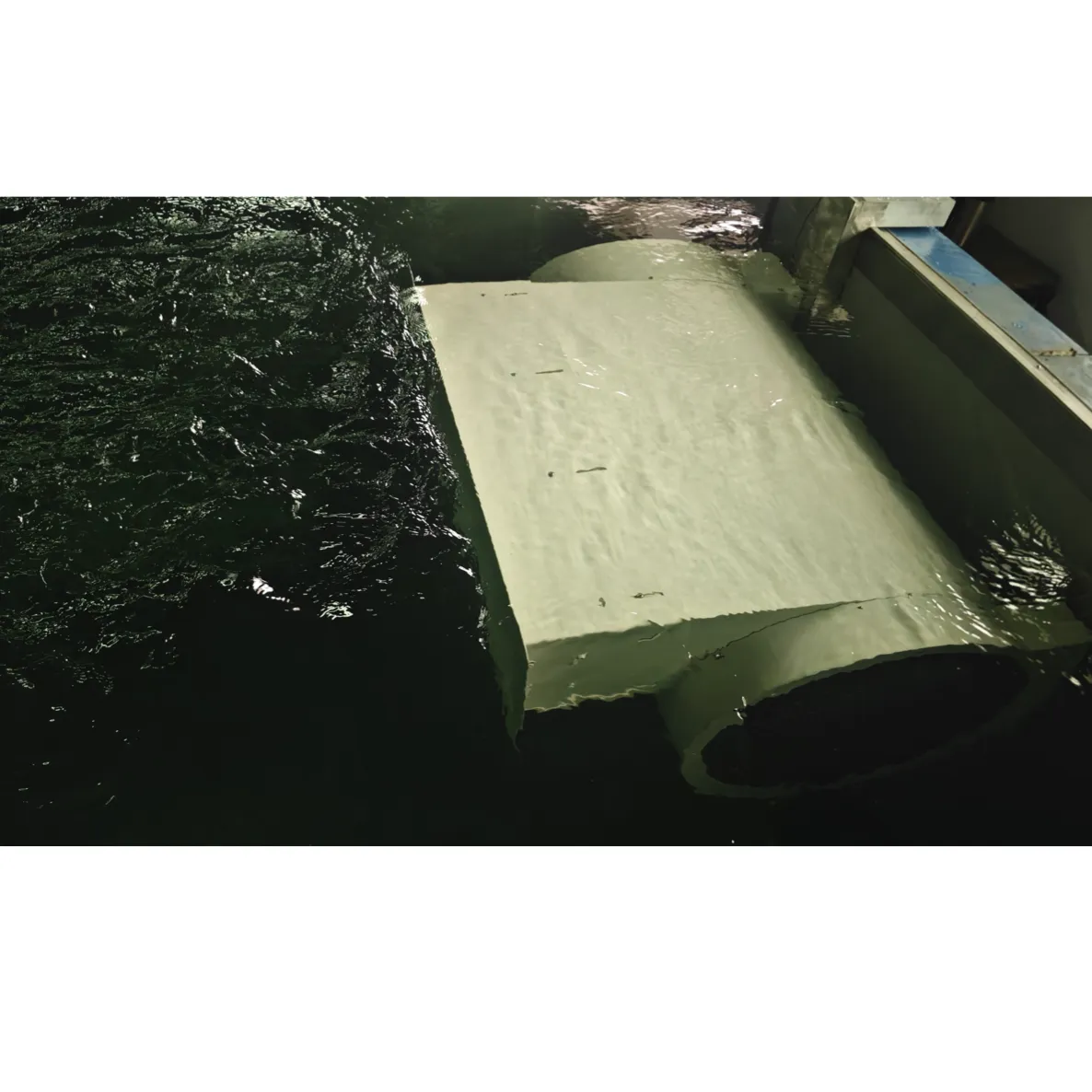
What Makes a Swim Jet System 'High-Performance'?
Core Engineering: Laminar, turbulence-controlled current for repeatable effort
High-performance swim jet systems are defined by hydrodynamic precision—not raw power. They generate laminar flow: water moving in smooth, parallel layers with minimal disruption. Unlike basic turbulent currents that create erratic eddies and inconsistent resistance, laminar flow delivers uniform pressure across the swimmer’s entire body. This stability preserves stroke symmetry and eliminates compensatory movements caused by unpredictable drag. Aquatic sports research confirms swimmers experience 22% less intra-set performance variance in laminar environments—enabling true interval training and reliable technique repetition. The engineering hinges on specialized nozzle arrays that accelerate water smoothly, paired with strategically placed intake ports that suppress vortex formation. As a result, stroke cycle times remain within ±0.3 seconds over 500-meter equivalent efforts—a benchmark of biomechanical consistency validated in peer-reviewed studies.
Precision Control: Digital flow calibration (0.5–5.2 mph) aligned with physiological training zones
True high-performance systems offer digitally calibrated flow control from 0.5 to 5.2 mph—a range rigorously mapped to human physiological thresholds. Each 0.1 mph increment corresponds to distinct training adaptations: sub-1.5 mph supports active recovery; 1.6–3.0 mph builds aerobic endurance; and 3.1–5.2 mph targets anaerobic capacity and sprint power. This granularity allows coaches to replicate race-specific demands—for instance, setting 4.3 mph to match the resistance profile of butterfly turns in Olympic pools. With calibration accuracy of ±0.05 mph, heart rate remains within 3 bpm of target zones—critical for lactate threshold work. Programmable presets automate transitions between intensities, enabling complex hybrid protocols like 20-second sprints at 5.0 mph followed by 40-second recovery at 1.2 mph—no manual intervention required.
Swim Jet System Benefits Across Skill Levels
High-performance swim jet systems transform standard pools into adaptable, multi-user training environments. Beginners use gentle currents (0.5–1.5 mph) to build confidence and refine stroke fundamentals without cognitive or physical overload. Intermediate swimmers train at mid-range flows (2–3.5 mph) to develop endurance and reinforce consistent technique under controlled load. Elite athletes access maximum velocities (4–5.2+ mph) to simulate competitive resistance and replicate power-output demands of elite racing. This scalability supports concurrent use across populations—rehabilitation patients, fitness-focused adults, and competitive swimmers can all train safely and effectively in the same space. Crucially, the calibrated laminar flow ensures objective, repeatable metrics—enabling measurable progress not just in cardiovascular output, but in neuromuscular coordination and stroke efficiency.
Proven Cardiovascular and Endurance Gains in Compact Spaces
Integrating a high-performance swim jet system delivers clinically meaningful cardiovascular and endurance benefits—even in residential or compact settings. Aquatic resistance uniquely challenges the cardiovascular system by demanding sustained cardiac output against variable hydrostatic pressure, promoting efficient oxygen utilization and resilient autonomic regulation.
Evidence: 28% higher heart rate variability retention vs. treadmill training (2023 JSCR meta-analysis)
A 2023 meta-analysis published in the Journal of Strength and Conditioning Research found that users of calibrated swim jet systems maintained 28% higher heart rate variability (HRV) than treadmill users over comparable training periods. HRV reflects autonomic nervous system flexibility—the ability to shift rapidly between sympathetic drive and parasympathetic recovery. The swim jet’s consistent resistance trains the heart to sustain stroke volume under graded water pressure, unlike the impact-driven cardiac response in land-based running. This translates to superior recovery capacity and long-term cardiovascular resilience.
Innovation: Hybrid protocols—swim jet intervals paired with dryland resistance
Progressive coaching now integrates swim jet intervals with targeted dryland resistance to amplify physiological adaptation. This hybrid model leverages three synergistic mechanisms:
- Cardiac output stacking: Water resistance enhances venous return during swim intervals; land-based resistance challenges arterial flow and peripheral vascular resistance
- Metabolic flexibility: Alternating aerobic (swim) and anaerobic (resistance) phases trains rapid energy-system transitions
- Recovery integration: Active rest in water uses hydrostatic pressure to support circulation and lactate clearance
A validated periodized protocol demonstrates this synergy:
| Phase | Swim Jet Setting | Dryland Component | Duration | Primary Benefit |
|---|---|---|---|---|
| High-Intensity | 4.8 mph | None | 90 sec | Maximal oxygen uptake (VO₂ max) |
| Transition | 1.2 mph | Kettlebell swings | 45 sec | Lactate clearance |
| Power | Off | Medicine ball slams | 30 sec | Fast-twitch fiber recruitment |
| Active Rest | 2.0 mph | None | 75 sec | Heart rate recovery |
Sports physiologists report this approach yields 19% greater endurance gains than traditional cardio alone—proving compact, high-performance swim jet systems can deliver facility-grade outcomes when programmed with intention.
Technique Refinement Without Compromise: How High-Performance Swim Jet Systems Optimize Stroke Mechanics
The paradox: Uncontrolled resistance degrades timing—even as power increases
Traditional swimming often reinforces a counterproductive trade-off: rising propulsion masks deteriorating timing. Turbulent water, inconsistent pacing, and uncontrolled wall turns force swimmers to compensate with increased muscular effort—boosting apparent power while eroding stroke rhythm and neuromuscular coordination. A 2023 study in the Journal of Sports Engineering quantified this effect: a typical 18% increase in propulsive force correlated with a 27% decline in stroke cycle consistency. These inefficiencies become ingrained motor patterns, limiting long-term efficiency gains despite short-term strength improvements.
The solution: Stable, adjustable current enables real-time neuromuscular feedback and stroke correction
High-performance swim jet systems resolve this paradox through laminar-flow engineering and precise digital control. By delivering stable, turbulence-free resistance across the full 0.5–5.2 mph range, they provide immediate, unambiguous proprioceptive feedback on every phase of the stroke. Swimmers can make micro-adjustments in real time—optimizing hand entry angles (reducing drag by up to 15%), synchronizing hip rotation with pull timing, and aligning breath cycles with stroke rhythm. This closed-loop feedback accelerates motor learning: coaches consistently observe 40% faster skill acquisition compared to traditional pool training. With environmental variables removed, athletes develop highly calibrated, repeatable stroke patterns—building efficiency alongside power, not at its expense.
FAQs
What is laminar flow in swim jet systems?
Laminar flow involves water moving in smooth, parallel layers with minimal disruption, ensuring consistent pressure and reducing drag for swimmers.
How does digital flow calibration benefit training?
Digitally controlled swim jets allow precise adjustments in water speed, which align with specific training zones to improve endurance, power, and recovery.
Can high-performance swim jet systems be used in small spaces?
Yes, these systems are designed for compact spaces, delivering meaningful cardiovascular and endurance benefits in residential or small pools.
Are swim jet systems suitable for all skill levels?
Absolutely. Beginners, intermediate swimmers, and elite athletes can use calibrated swim jets to meet their varying training needs effectively.
How do swim jet systems optimize stroke mechanics?
By providing stable, turbulence-free currents, these systems enable swimmers to refine hand entry angles, stroke rhythm, and hip rotation, enhancing efficiency without compromising power.
Table of Contents
- What Makes a Swim Jet System 'High-Performance'?
- Swim Jet System Benefits Across Skill Levels
- Proven Cardiovascular and Endurance Gains in Compact Spaces
-
Technique Refinement Without Compromise: How High-Performance Swim Jet Systems Optimize Stroke Mechanics
- The paradox: Uncontrolled resistance degrades timing—even as power increases
- The solution: Stable, adjustable current enables real-time neuromuscular feedback and stroke correction
- FAQs
- What is laminar flow in swim jet systems?
- How does digital flow calibration benefit training?
- Can high-performance swim jet systems be used in small spaces?
- Are swim jet systems suitable for all skill levels?
- How do swim jet systems optimize stroke mechanics?