
 EN
EN
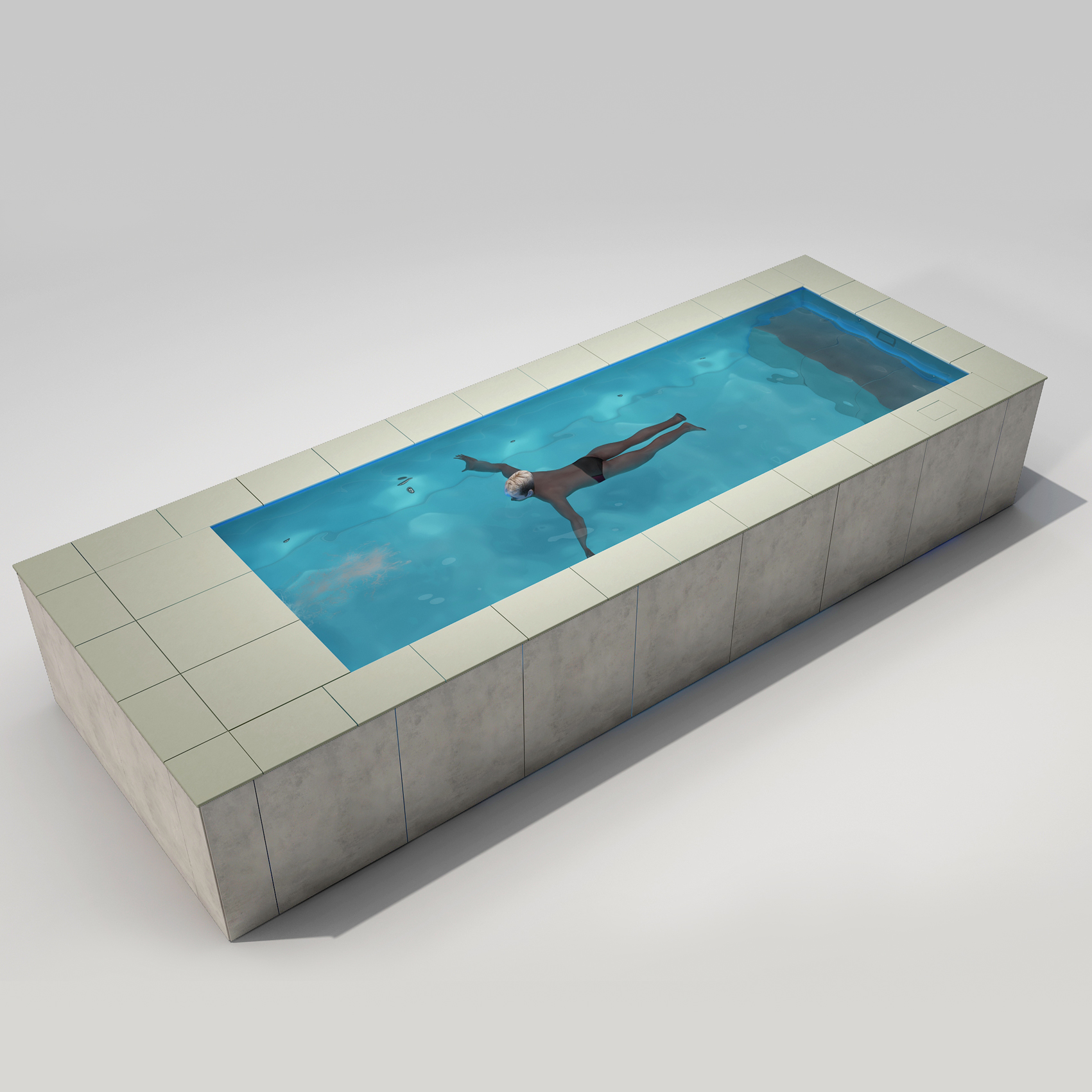
How an Endless Pool Swimming Machine Enables Focused Stroke Refinement
Continuous Flow and Zero-Turn Swimming for Repetitive, High-Volume Technique Practice
An endless pool swimming machine generates a steady, adjustable counter-current that lets you swim continuously in place—no forward movement, no flip turns, and no interruptions. This eliminates the 30% of drill time typically lost to turns in lap pools, enabling high-volume, uninterrupted repetition of specific stroke elements. Repetition is foundational to muscle memory development, and the stationary current allows swimmers to execute 10–20 focused strokes per minute during technique drills—more than triple the 4–6 strokes per minute achievable in a standard 25-yard pool with turn interruptions. That density of targeted practice accelerates consistent skill acquisition across all ability levels.
Contrast with Lap Pools and Open Water: Eliminating Turn Distractions and Environmental Variables
Lap pools interrupt flow with mandatory turns; open water introduces unpredictable variables—shifting currents, wind-driven waves, temperature fluctuations, and navigation around other swimmers—all of which force reactive stroke adjustments and obscure underlying technical flaws. In contrast, the endless pool’s controlled, turn-free environment delivers stable, repeatable conditions from start to finish. Coaches can observe the full stroke cycle in real time while standing adjacent to the swimmer, offering immediate, consistent feedback without pacing a deck. A 2023 American Swimming Coaches Association study found that youth competitive swimmers who trained with 12 weeks of focused stationary drills improved stroke consistency by 12% compared to peers using lap-only protocols.
Mirror-Bottom Design and Above-Water Coaching for Instant Visual and Verbal Form Correction
The mirror-bottom surface provides real-time underwater visual feedback—swimmers see their entire body position mid-stroke without pausing or exiting the water. Combined with above-water coaching, this enables instant verbal cues and visual modeling to correct issues like dropped elbows, collapsed ankles, or asymmetrical hip rotation. Unlike lap-based instruction—where feedback is delayed until lane ends—corrections happen during the stroke, reinforcing optimal neuromuscular patterns on the fly. Research shows real-time form correction reduces the time required to resolve common stroke errors by 32% compared to delayed feedback models.
Current-Modulated Resistance as a Biofeedback Tool for Stroke Timing and Propulsive Efficiency
Adjustable current resistance serves as objective, physical biofeedback: if propulsion falters—even briefly—the swimmer drifts backward. This immediate response highlights inefficiencies in pull timing, hand path, or rotational coordination that might go unnoticed in static water. Swimmers naturally experiment with variations in catch depth, elbow angle, or hip engagement to maintain position, refining propulsive efficiency through guided trial and error. Coaches can incrementally raise resistance to stress-test newly acquired technique, ensuring gains persist under higher intensities—a critical bridge to race-pace performance.
Documented Gains in Kick Strength, Body Alignment, and Stroke Consistency
Evidence consistently supports measurable improvements from structured endless pool training. A 2024 National Swim Coaches Association analysis of competitive age-group swimmers showed that twice-weekly, 12-week focused drill programs yielded a 21% improvement in stroke consistency and a 14% increase in average kick power versus lap-only control groups. The distraction-free setting promotes sustained attention on neutral spinal alignment, precise hand entry, and balanced bilateral rotation—habits that transfer directly to lap and open-water performance.
Key Constraints: Shallow Flow Depth, Lateral Drift ('Snaking'), and Reduced Rotational Demand
Most standard endless pool models operate at a maximum flow depth of 4 feet—limiting full-body rotation essential for elite freestyle and backstroke mechanics, particularly for taller athletes. Additionally, lateral drift (“snaking”) is common: subtle imbalances cause gradual side-to-side movement across the narrow current, demanding constant micro-corrections that fragment focus. While ideal for isolating and refining technique, the confined space inherently restricts large-range rotational motion and sustained endurance work. As such, endless pool training complements—but does not replace—traditional lap or open-water sessions needed to develop full-stroke mobility, pacing strategy, and competitive stamina.
Focal Point Drills and Low-Intensity 'Tuning' Protocols Designed for Stationary Current
The endless pool excels as a technical diagnostic lab. Its uniform resistance reveals asymmetries and inefficiencies invisible in traditional settings—making it ideal for focal point drills that isolate discrete elements: hand trajectory, kick tempo synchronization, or breathing-stroke integration. Low-intensity “tuning” sets (performed at 50–60% effort) maximize kinesthetic awareness, allowing swimmers to refine alignment and timing without fatigue-induced compensation. Coaches typically structure sessions in 10-minute drill blocks followed by tuning intervals—optimizing cognitive engagement while building durable neuromuscular patterns. Key protocols include:
- Hand-trajectory drills: Maintaining consistent S-pattern pulls against current
- Kick-tempo synchronization: Aligning kick cycles with stroke rhythm using auditory cues
- Breathing-stroke integration: Practicing oxygen-efficient head rotations without disrupting body line
This precision-focused approach transforms technical development from abstract instruction into tangible, repeatable biomechanical refinement.
FAQ
How does an endless pool enhance stroke refinement?
An endless pool produces a stationary current that allows swimmers to execute uninterrupted strokes, focusing on repetitive practice for muscle memory development.
Can endless pools entirely replace lap pools?
No, endless pools are ideal for technique refinement but are not substitutes for sessions emphasizing full-stroke mobility, pacing, or endurance.
What is the benefit of the mirror-bottom design?
The mirror-bottom provides swimmers with visual feedback on underwater body positioning, enabling instant corrections during the stroke.
What limitations do endless pools have?
Key constraints include limited flow depth, which restricts full-body rotation for taller swimmers, and lateral drift that necessitates micro-adjustments during drills.
Are endless pools suitable for all swimming levels?
Yes, they cater to swimmers of all levels, from beginners focusing on foundational strokes to advanced athletes refining competitive techniques.
Table of Contents
-
How an Endless Pool Swimming Machine Enables Focused Stroke Refinement
- Continuous Flow and Zero-Turn Swimming for Repetitive, High-Volume Technique Practice
- Contrast with Lap Pools and Open Water: Eliminating Turn Distractions and Environmental Variables
- Mirror-Bottom Design and Above-Water Coaching for Instant Visual and Verbal Form Correction
- Current-Modulated Resistance as a Biofeedback Tool for Stroke Timing and Propulsive Efficiency
- Documented Gains in Kick Strength, Body Alignment, and Stroke Consistency
- Key Constraints: Shallow Flow Depth, Lateral Drift ('Snaking'), and Reduced Rotational Demand
- Focal Point Drills and Low-Intensity 'Tuning' Protocols Designed for Stationary Current
- FAQ