
 EN
EN
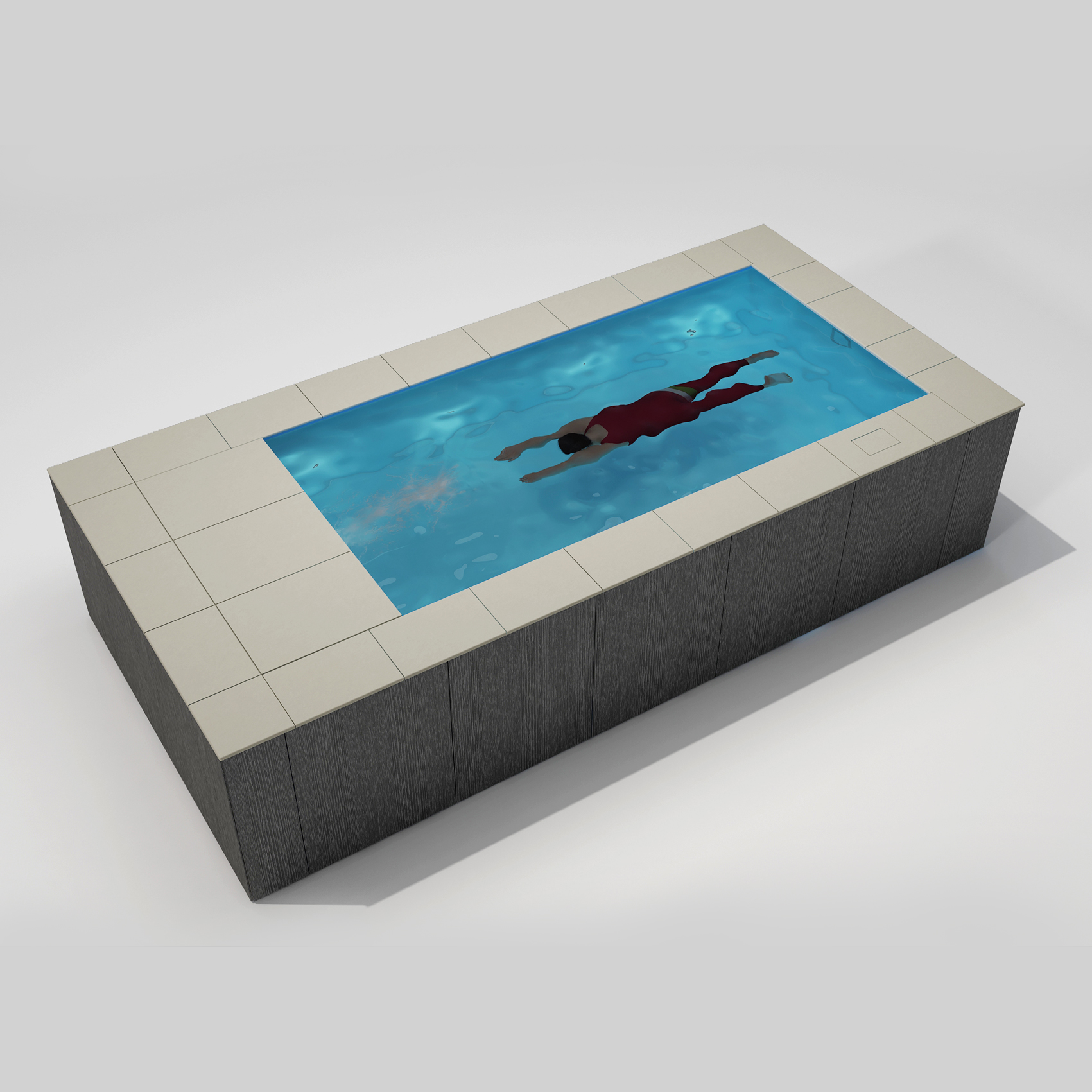
How Pool Swim Jet Systems Create Effective Swimming in Compact Spaces
The physics of adjustable swim current in under-300-gallon backyard pools
A pool swim jet system operates on the counter-current principle—like a water-based treadmill—where pumps push controlled volumes of water through aligned nozzles to create a steady, swimmable flow. In under-300-gallon backyard pools—too small for lap swimming—this transforms limited space into a functional training zone. Early single-jet models often produced narrow, turbulent streams that disrupted stroke mechanics and reduced workout comfort. Modern multi-jet systems distribute flow evenly across a full swim lane, delivering a smooth, natural current that mimics open-water conditions—even in the most compact footprints.
Optimal flow rate and resistance thresholds (15–25 GPM) for meaningful swim-in-place training
Effective swim-in-place training in small pools hinges on precise flow control. Research from a 2024 analysis of home aquatic fitness equipment confirms that 15–25 GPM delivers the optimal balance: enough resistance for cardiovascular and technique work without compromising stability or efficiency. Below 15 GPM, resistance is too weak for measurable training benefit; above 25 GPM, turbulence increases, energy use rises unnecessarily, and balance challenges grow—especially for beginners and intermediate swimmers. Adjustable speed controls allow users to scale resistance precisely, supporting everything from low-impact water walking to race-pace endurance drills.
Top Pool Swim Jet Systems for Small Pools: Remco, Fastlane Pro, and Badu Reviewed
Performance comparison: Energy efficiency, current consistency, and user control at low-volume flow
The three leading systems for compact pools each prioritize different performance attributes—tailored specifically for under-300-gallon installations. Key differences are summarized below:
| System | Energy Efficiency | Current Consistency | User Control | Regular Maintenance Required |
|---|---|---|---|---|
| Remco SwimJet | Uses 20–50% less power than traditional pump systems | Wide, turbulence-free natural current | Up to 100 variable speed settings via remote or app | No |
| Fastlane Pro | Highest power draw for hydraulic operation | Wide, deep consistent current | 50 variable speed settings | Yes (annual oil changes) |
| Badu Swim Jet | Lower power draw than Fastlane Pro | Narrow, steady current | 1 fixed speed setting | No |
All three deliver sufficient resistance for effective swim-in-place training in small pools—but differ significantly in usability, long-term cost, and installation flexibility.
Badu pool swim jet advantages: Low-profile installation and seamless retrofit compatibility
For homeowners with existing small pools or tight yard constraints, Badu stands out for two practical advantages. Its low-profile design mounts entirely within the pool wall—no protrusion into the swim area or encroachment on deck space—making it ideal for compact backyards. It also supports seamless retrofitting into most existing small pools, avoiding costly structural modifications. Unlike hydraulic alternatives, Badu requires only periodic visual inspection—no scheduled maintenance or oil changes—reducing long-term ownership burden. Combined with its lower energy draw, this makes Badu a cost-effective, hassle-free option for casual and regular swimmers alike.
Installation Considerations for Pool Swim Jet Systems in Space-Constrained Backyards
Critical spatial and structural requirements: Minimum depth, wall integrity, and electrical safety clearances
Installing a swim jet in a space-constrained backyard demands strict attention to three foundational requirements. First, most permanent systems require a minimum water depth of 4 feet to generate a stable, turbulence-free current—a key constraint for shallow plunge pools. Second, wall-mounted retrofits rely on structurally sound pool walls capable of bearing the jet’s weight and sustained hydraulic pressure; aging or thin-walled concrete or fiberglass pools may need reinforcement to prevent cracking or leaks. Third, national electrical codes mandate a minimum 5-foot clearance between the jet’s power connection and the pool edge—a spatial requirement that often dictates placement in narrow yards and can impact usable swim width. Given these interlocking technical and safety factors, professional installation is strongly advised to ensure compliance with local codes, preserve warranty coverage, and avoid future liability or performance issues.
FAQ
What is a pool swim jet system?
A pool swim jet system is a physical mechanism installed in pools that generates a controlled water current, allowing swimmers to swim in place even in small pools, mirroring the experience of open-water swimming.
What is the ideal flow rate for swim-in-place training?
The ideal flow rate ranges between 15–25 GPM as it provides enough resistance for effective cardiovascular and technique training without causing excess turbulence.
Are pool swim jet systems energy-efficient?
Modern systems like Remco SwimJet are highly energy-efficient, using up to 50% less power than traditional systems. Others have varying levels of efficiency depending on their components and setup.
Can I retrofit pool swim jets into an existing pool?
Yes, systems like Badu Swim Jet are designed for seamless retrofitting and are ideal for existing pools with minimal structural modifications.
What are the installation requirements for swim jets in compact pools?
Installation requires a minimum water depth of 4 feet, structurally sound pool walls, and adherence to electrical safety codes, including maintaining a minimum 5-foot clearance for power connections.