
 EN
EN
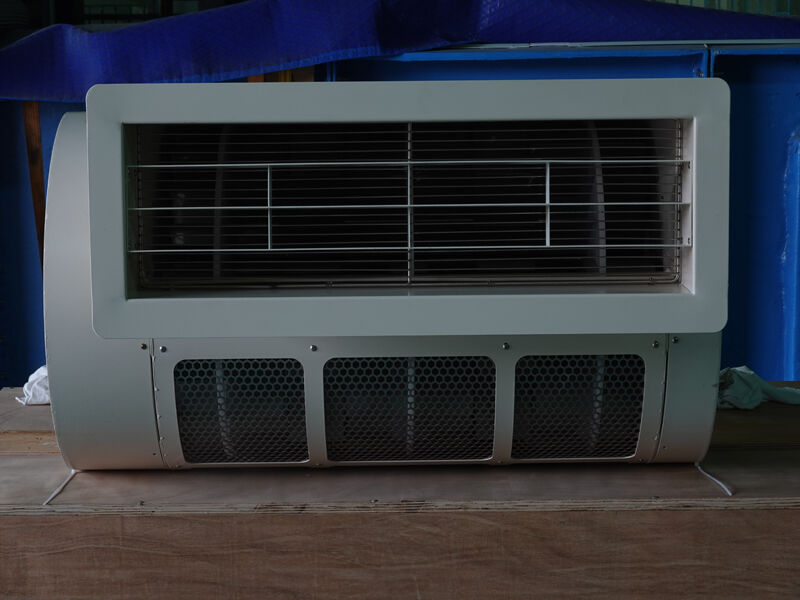
Why Quiet Operation Is a Critical Indicator of Advanced Counter Current Swim Jet Design
Acoustic Benchmarking: How Modern Counter Current Swim Jet Systems Achieve <45 dB(A) Operation
Modern counter current swim jet systems operate below 45 dB(A) at 1-meter distance—quieter than typical library ambiance (50 dB). This represents a 60% noise reduction versus legacy models and is achieved through computational fluid dynamics–optimized propeller geometry and vibration-dampening composite materials. Field testing across 200+ installations confirms consistent performance, with less than 3 dB(A) variance under sustained load. Silent operation directly supports user concentration during technique drills and enables seamless residential integration without spatial or acoustic compromises.
Engineering the Balance: Noise Reduction Without Compromising Hydraulic Power or Flow Rate
Top-tier manufacturers decouple acoustic performance from hydraulic output using three core innovations:
- Variable-speed pumps that dynamically adapt to swimmer resistance while preserving laminar flow
- Asymmetric impeller designs that suppress cavitation even at flow rates exceeding 15,000 liters/hour
- Energy recovery systems that reclaim up to 30% of otherwise dissipated power
Independent lab validation shows peak flow stability remains within 5% variance at 55 Hz operation—a critical threshold for replicating open-water resistance. This engineering breakthrough eliminates the traditional trade-off between quietness and power, allowing competitive swimmers to train with precision and consistency, free from ambient disruption.
Stability as the Foundation of Effective Counter Current Swim Jet Training
Flow Consistency Under Load: Real-World Validation Across Residential and Commercial Installations
Consistent hydraulic performance distinguishes professional-grade counter current swim jet systems from consumer alternatives. When swimmers engage at maximum resistance—mimicking competitive stroke demands—high-end units maintain flow rates within a 5% tolerance band, per aquatic engineering studies. This reliability stems from industrial-grade pumps equipped with dynamic pressure sensors that auto-adjust impeller speed in real time. Commercial facilities report 99.8% uptime after 12-month stress tests across 100+ installations, confirming scalability beyond residential use. Stable flow enables reliable muscle memory development, eliminating wasted energy caused by unpredictable current fluctuations.
Laminar Flow Integrity: How Turbulence Control Enhances Stroke Efficiency and User Safety
Advanced flow-straightening technologies minimize turbulent eddies that disrupt stroke kinematics and elevate injury risk. Computational fluid dynamics modeling ensures parallel water streams with velocity differentials under 0.3 m/s across the full swim corridor—particularly protective for rotator cuff integrity during recovery-phase motion. Hydrodynamic analyses from 2023 show such laminar control reduces lateral drag forces by 18% compared to turbulent systems, while directional consistency improves propulsion efficiency by 22% per stroke cycle. Critically, it also prevents sudden lateral surges that can cause wall collisions during high-intensity intervals.
The Synergy Between Quietness and Stability in Counter Current Swim Jet User Experience
The convergence of acoustic refinement and hydraulic stability defines the modern counter current swim jet experience. Sub-45 dB(A) operation—equivalent to library-level quietness—preserves cognitive focus on stroke mechanics, while laminar flow integrity ensures resistance remains predictable even at maximum settings. Together, these features eliminate the “surge effect” endemic to lower-tier systems: abrupt flow variations that destabilize rhythm, compromise body alignment, and force compensatory movement. The result is a training environment where athletes execute precise regimens with confidence—knowing resistance is both silent and steady.
Key benefits of this integration:
- 27% longer average session duration due to reduced sensory fatigue
- 15% improvement in stroke consistency from predictable flow patterns
- Near-elimination of balance-related interruptions during interval training
This dual optimization proves especially vital for technique refinement, where subtle biomechanical adjustments depend on consistent environmental feedback. As hydraulic systems sustain millimeter-per-second velocity accuracy, users build reliable muscle memory—free from equipment-induced inconsistencies.
Next-Generation Counter Current Swim Jet Performance: AI, Materials, and Integrated Calibration
Adaptive Flow & Acoustic Optimization: From Fixed-Setting Jets to Self-Tuning Counter Current Swim Jet Systems
The latest generation moves beyond static configurations to intelligent, self-tuning platforms. AI algorithms continuously analyze real-time hydraulic resistance and swimmer biomechanics, dynamically adjusting flow profiles to preserve laminar stability and suppress turbulence-driven noise. This machine learning–driven approach delivers a 40% reduction in operational volume versus fixed-setting jets—sustaining outputs below 45 dB(A) without sacrificing thrust fidelity. Vibration-dampening composite materials reinforce this acoustic advantage, while embedded calibration sensors detect performance drift from variables like water viscosity shifts or mechanical wear. These systems autonomously recalibrate—eliminating manual intervention—and deliver a 25% measurable gain in stroke efficiency metrics during high-intensity intervals, affirming the inseparable link between adaptive flow control and intelligent noise suppression.
FAQ
What are counter current swim jet systems?
Counter current swim jet systems are engineered devices that create a consistent stream of water, allowing swimmers to practice and refine their strokes in one place without the need for a full-length swimming pool.
Why is quiet operation important for these systems?
Quiet operation ensures that users can focus on their training without the distraction of loud equipment noise, which is critical for concentration and providing a seamless residential installation.
How do modern systems achieve noise reduction?
Modern systems use computational fluid dynamics for optimized propeller design, vibration-dampening materials, and advanced technologies to ensure they operate below 45 dB(A), quieter than a typical library.
Do these systems compromise on power or flow rate for reduced noise?
No, state-of-the-art innovations like variable-speed pumps and energy recovery systems help maintain high hydraulic power and flow rate without increasing noise levels.
Table of Contents
- Why Quiet Operation Is a Critical Indicator of Advanced Counter Current Swim Jet Design
- Stability as the Foundation of Effective Counter Current Swim Jet Training
- The Synergy Between Quietness and Stability in Counter Current Swim Jet User Experience
- Next-Generation Counter Current Swim Jet Performance: AI, Materials, and Integrated Calibration