
 EN
EN
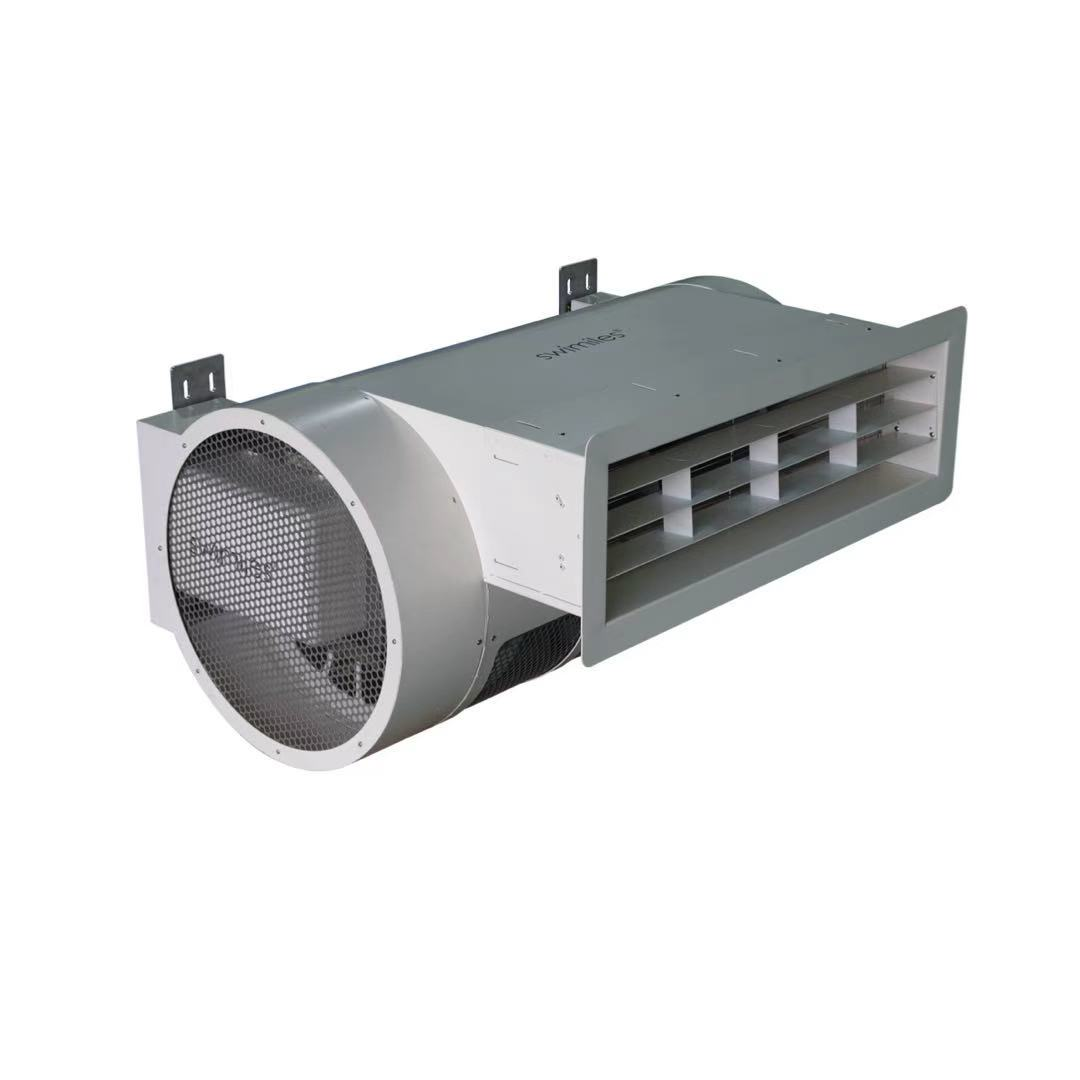
Match Performance Specifications to Your Training Goals
Flow rate, speed adjustability, and swimmer ability alignment
Aligning performance specs with your training goals—and your current ability—is the essential first step in selecting a counter current swim jet. Flow rate directly determines the maximum usable current speed and resistance. Casual fitness swimmers (2–3 sessions/week for general health or low-intensity endurance) typically require 1,500–3,000 gallons per minute (gpm). Competitive swimmers and triathletes training for sprint or long-distance events need 3,500 gpm or higher to build race-specific strength and maintain target pace. Equally important is wide, precise speed adjustability: it enables seamless transitions between warm-up, technique drills, interval sets, and cooldown—ensuring the system supports your progression over months or years.
Current quality essentials: Smoothness, laminar flow, and bubble-free output for stroke refinement
Even a high-flow system delivers diminishing returns if current quality is compromised. Turbulent, choppy flow or excessive air entrainment disrupts body position, destabilizes stroke timing, and masks subtle technique flaws. True laminar flow—water moving in uniform, parallel layers—provides consistent, predictable resistance across the full stroke cycle, from catch through finish. Bubble-free output eliminates erratic surges or lateral shifts that force compensatory movements. Without these qualities, swimmers risk reinforcing inefficient habits that become difficult to correct—even with coaching. For anyone serious about measurable stroke improvement, laminar, bubble-free flow isn’t optional; it’s foundational.
Evaluate Installation Requirements and Space Constraints
Swimming envelope dimensions, nozzle depth, and dead zone prevention
A powerful jet means little without proper spatial integration. The “swimming envelope”—the clear, stable zone where you train—must accommodate your height, reach, and stroke length. Most adult competitive swimmers need at least 7 feet of unobstructed horizontal distance between the jet nozzle and the opposite wall to avoid wall contact during sustained effort. Nozzle depth is equally critical: installing the unit 12–18 inches below the average water line ensures even current distribution across the torso and legs. Too shallow, and surface turbulence dominates; too deep, and flow loses intensity at shoulder level. Poor placement creates dead zones—areas of weak or inconsistent current—that force constant positional correction, fragmenting focus and eroding training efficiency.
Retrofit feasibility: Pit size, plumbing compatibility, and in-ground upgrade considerations
Adding a jet to an existing in-ground pool demands careful pre-installation assessment. Most full-power units require a dedicated structural pit of at least 24 cubic feet—cut into the pool shell—necessitating a professional evaluation to avoid compromising rebar integrity or the waterproofing membrane. Plumbing must also support consistent high-volume flow: older pools with 1.5-inch supply lines often lack the capacity for jets rated above 3,000 gpm, requiring pipe upgrades to prevent pressure drop and current instability. Electrical readiness matters too—mid- to high-power systems typically demand a dedicated 240V circuit, which many legacy pool setups lack. Skipping this due diligence commonly triggers unplanned costs that increase total project expense by 15–30% (Pool & Hot Tub Alliance, 2023).
Compare Top Counter Current Swim Jet Systems by Real-World Metrics
BaduStream II vs. BaduJet Turbo Pro vs. Imperial: Output, control, noise, and efficiency comparison
| System | Max Flow Output | Control Type | Average Operating Noise | Annual Energy Consumption |
|---|---|---|---|---|
| BaduStream II | 52 m³/h | 3-position mechanical | 58 dB | 1280 kWh |
| BaduJet Turbo Pro | 65 m³/h | Infinite digital adjustment | 62 dB | 1450 kWh |
| Imperial | 70 m³/h | App-enabled variable adjustment | 59 dB | 1390 kWh |
The BaduStream II suits recreational users and beginners: its lower noise profile and energy use make it ideal for residential settings where quiet operation and cost efficiency are priorities. The BaduJet Turbo Pro serves intermediate and competitive swimmers needing granular, repeatable speed control for structured interval work and stroke-specific drills. The Imperial strikes a refined balance—delivering the highest flow among the three while maintaining lower noise than the Turbo Pro and more efficient energy use than expected at its output tier—making it especially well-suited for daily, year-round training. All three models prioritize laminar, bubble-free flow and robust construction, ensuring reliable stroke refinement across skill levels.
Prioritize Long-Term Value: Energy Efficiency, Durability, and Support
Focusing solely on upfront cost overlooks the true investment: a counter current swim jet is a long-term training tool, not a one-time purchase. Energy-efficient pump designs—verified in a 2023 residential pool equipment analysis—reduce annual power consumption by up to 40% versus standard models, translating to hundreds of dollars in savings over a decade. Durability hinges on corrosion-resistant materials built for continuous chlorinated-water exposure: units featuring reinforced fiberglass housings and UV-stabilized ABS components resist degradation far better than basic plastics, minimizing premature failures and service interruptions. Finally, evaluate post-purchase support—not just warranty length, but parts availability, local service network access, and responsive technical assistance. A longer warranty backed by accessible support protects your training consistency and extends usable lifespan. Calculating total lifecycle cost—factoring in energy, maintenance, and longevity—reveals the option that truly delivers superior value and performance over time.
FAQs
Q1. What flow rate do I need for my training goals?
A: Casual swimmers typically require 1,500–3,000 gpm, while competitive swimmers and triathletes need 3,500 gpm or more for race-specific strength training.
Q2. Why is laminar flow important in counter current swim jets?
A: Laminar flow ensures uniform, predictable water movement essential for stroke refinement, while turbulent flow can disrupt body position and technique.
Q3. How much space is needed for a counter current swim jet installation?
A: A swimming envelope with at least 7 feet of unobstructed distance and proper nozzle depth (12–18 inches below water) is recommended for effective training.
Q4. Can I retrofit a counter current swim jet into an older pool?
A: Yes, but you must assess pit size, plumbing compatibility, and electrical readiness to ensure proper installation without additional costs.
Q5. Which counter current swim jet system should I choose?
A: Choose based on your skill level and needs: BaduStream II for beginners, BaduJet Turbo Pro for intermediate swimmers, and Imperial for advanced or daily use.