
 EN
EN
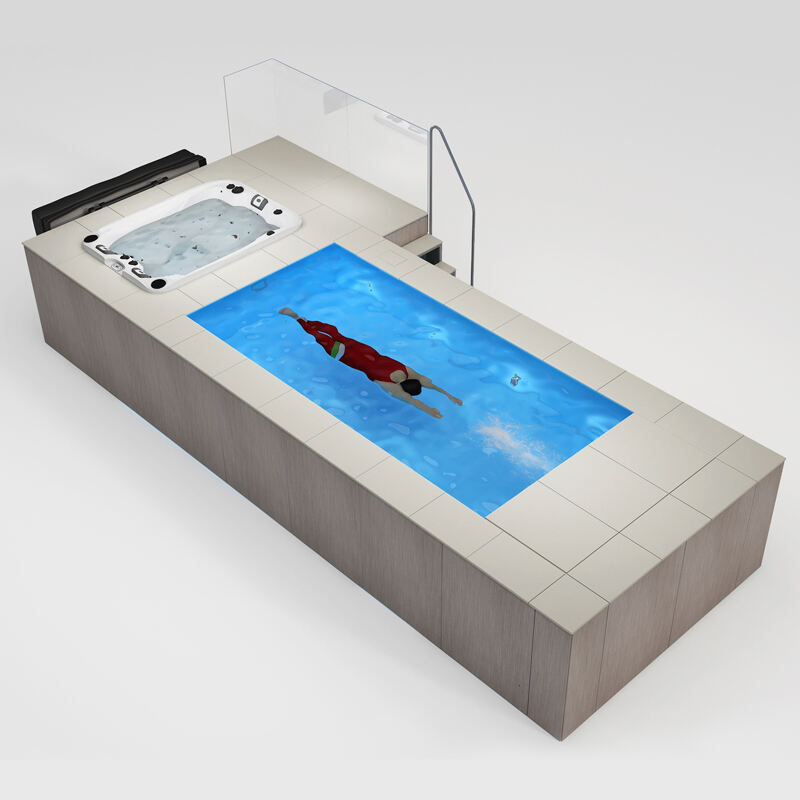
Precision Engineering: How Modular Pool Construction Systems Ensure Structural Consistency
Factory-Built Panel Systems and Bolted, Weld-Free Assembly Reduce On-Site Variability by 67%
Regular old concrete pools have always been pretty vulnerable to things like bad weather conditions, inconsistent workmanship from day to day, and just plain mistakes made during construction. These issues tend to mess with how accurate the dimensions end up being and make predicting structural performance tricky business. That's where modular pool systems come in handy. They tackle these problems right from the start because all those panels get made in factories where temperature and humidity can be controlled. The manufacturing process involves computer numerical control machines and big hydraulic presses, so they manage to hit those tight specs down to less than 1.5 millimeters - something regular on site pouring just cant match. When it comes time to put everything together, there are no welds involved since everything bolts together instead. This means no worrying about heat warping materials or inconsistent weld quality between different installations. A report from the Modular Build Institute back in 2023 showed these systems cut down structural variations at construction sites by around two thirds. What does that mean practically? Pools built this way maintain their strength characteristics consistently no matter where they go up, which makes sense when thinking about long term durability requirements for swimming facilities everywhere.
Why Prefabricated and Precision-Engineered Components Deliver Repeatable Load-Bearing Integrity
Before shipping out, prefabricated parts go through complete material checks and rigorous load tests at the manufacturing plant. Computer aided designs set out the specifics for how joints should look, where reinforcements need to be placed, and what kind of hardware connects everything together, which helps spread stress evenly across structures. The panels themselves are made with incredible precision, hitting within plus or minus 0.8 millimeters, way beyond what's required by standard metal fabrication tolerances according to ISO 2768-mK guidelines. Independent testing shows that bolted connections maintain about 99.2% of their expected strength even after going through various environmental conditions. That's significantly better than welded joints which typically hold between 85 to 92% of their rated capacity. The reason? Bolted systems avoid those tricky heat affected areas and eliminate issues caused by inconsistent welding techniques. When manufacturers achieve this kind of consistent quality, they stop dealing with unpredictable results and start working with reliable, predictable structural performance instead.
Rigorous Quality Control Across the Modular Pool Manufacturing Lifecycle
A 7-Stage QC Framework: From Raw Material Certification to Hydrostatic Pressure Testing
Most modular pool makers have developed their own comprehensive quality control system that spans seven distinct stages. Each stage is carefully documented so we can track every component from start to finish. We begin by checking all raw materials thoroughly. For instance, we make sure the steel meets specific composition requirements and test concrete samples to confirm they reach the necessary compressive strength according to industry standards like ASTM A615 for reinforcing bars and ASTM C94 for mixed concrete. Next, laser technology helps us measure panels with incredible precision down to half a millimeter. Our joints undergo rigorous stress tests at twice what they would normally experience during operation. After that comes several other critical checks including how well coatings stick to surfaces following ASTM D3359 guidelines, verifying electrical systems meet NFPA 70 safety codes, ensuring proper drainage flow, and finally subjecting everything to water pressure tests at 150% of normal capacity. All these steps happen inside controlled factory environments instead of relying on last minute fixes at installation sites. This approach has dramatically cut down defects compared to conventional methods by around two thirds according to recent data from the Modular Build Institute.
Case Study: S-Series Structural Steel — 99.8% Dimensional Tolerance Compliance (ISO 2768-mK)
The S-Series structural steel really shows what happens when manufacturing is done right. We checked over 15,000 parts using those fancy coordinate measuring machines, and got about 99.8% compliance with those ISO 2768-mK standards, which means ±0.1mm per meter tolerance. That kind of precision makes installation straightforward with bolts only - no need for grinding, adding shims, or doing any on site fixes. When everything gets milled uniformly, the hydraulic forces spread out properly at connection points, so there aren't these hot spots where stress builds up and wears down the concrete faster than it should. Our automated production lines have real time monitoring systems that keep quality consistent from one batch to the next. What we end up with goes beyond just tight measurements though. It actually forms the basis for those impressive 30 year structural guarantees that set us apart in the industry.
Standardized Materials and Finishes for Cross-Project Uniformity in Modular Pools
Eliminating Batch Variation with 4500 psi Shotcrete, Porcelain Tile, and Mini Pebble Surfaces
Getting consistent results with modular pools really comes down to sticking with standardized materials instead of trying to customize everything. The shotcrete used for structures is always set at around 4500 psi and goes through pressure tests to check how dense it is, so we know every project will behave similarly when compressed. For porcelain tiles, we only work with those that can handle frost and salt damage, and we make sure all the color batches match before they leave the factory. This helps avoid situations where tiles look different from one delivery to another. When it comes to mini pebble finishes, we carefully mix aggregates after testing their sizes and binder ratios. This guarantees that the texture feels right, looks good in sunlight, and stays safe even when wet. These quality controls actually tackle what causes most problems in traditional pool construction - about 44% of all aesthetic issues stem from variations between batches. We also treat surfaces in our factories where temperature and humidity stay constant throughout production. This means better adhesion regardless of what kind of weather conditions exist outside. Standardized building kits help shave off roughly 30% of installation time while keeping material waste below 5%. So uniformity isn't just about looking nice on paper; it makes a real difference in meeting deadlines, controlling costs, and ensuring pools perform well over many years.
FAQ
What are the benefits of using modular pool construction systems?
Modular pool systems provide improved structural consistency, precision in construction, and reduced onsite variability by utilizing factory-built panel systems assembled without welding. This method ensures pools maintain their strength characteristics, contributing to long-term durability.
How do prefabricated components ensure load-bearing integrity?
Prefabricated components undergo rigorous quality control, including material checks and load tests, to ensure joint precision and even stress distribution. The high accuracy in construction, beyond standard metal fabrication tolerances, contributes to predictable structural performance.
What does the 7-stage QC framework involve?
The 7-stage quality control framework starts with raw material certification, followed by precision panel measurements, stress tests, coating checks, electrical safety verifications, drainage assessments, and hydrostatic pressure testing. This rigorous approach substantially reduces defects compared to traditional methods.
How does the use of standardized materials benefit modular pool construction?
Standardized materials, such as 4500 psi shotcrete and porcelain tiles, ensure consistent performance across projects and reduce onsite variability. This approach results in predictable pool characteristics, decreases installation time by 30%, and minimizes material waste to below 5%.
Why are bolted connections preferred over welded joints?
Bolted connections eliminate issues related to heat-affected areas and inconsistent welding techniques, maintaining 99.2% of their expected strength in various conditions. This leads to reliable and predictable structural performance compared to welded joints, which typically hold less strength.
Table of Contents
- Precision Engineering: How Modular Pool Construction Systems Ensure Structural Consistency
- Rigorous Quality Control Across the Modular Pool Manufacturing Lifecycle
- Standardized Materials and Finishes for Cross-Project Uniformity in Modular Pools
-
FAQ
- What are the benefits of using modular pool construction systems?
- How do prefabricated components ensure load-bearing integrity?
- What does the 7-stage QC framework involve?
- How does the use of standardized materials benefit modular pool construction?
- Why are bolted connections preferred over welded joints?